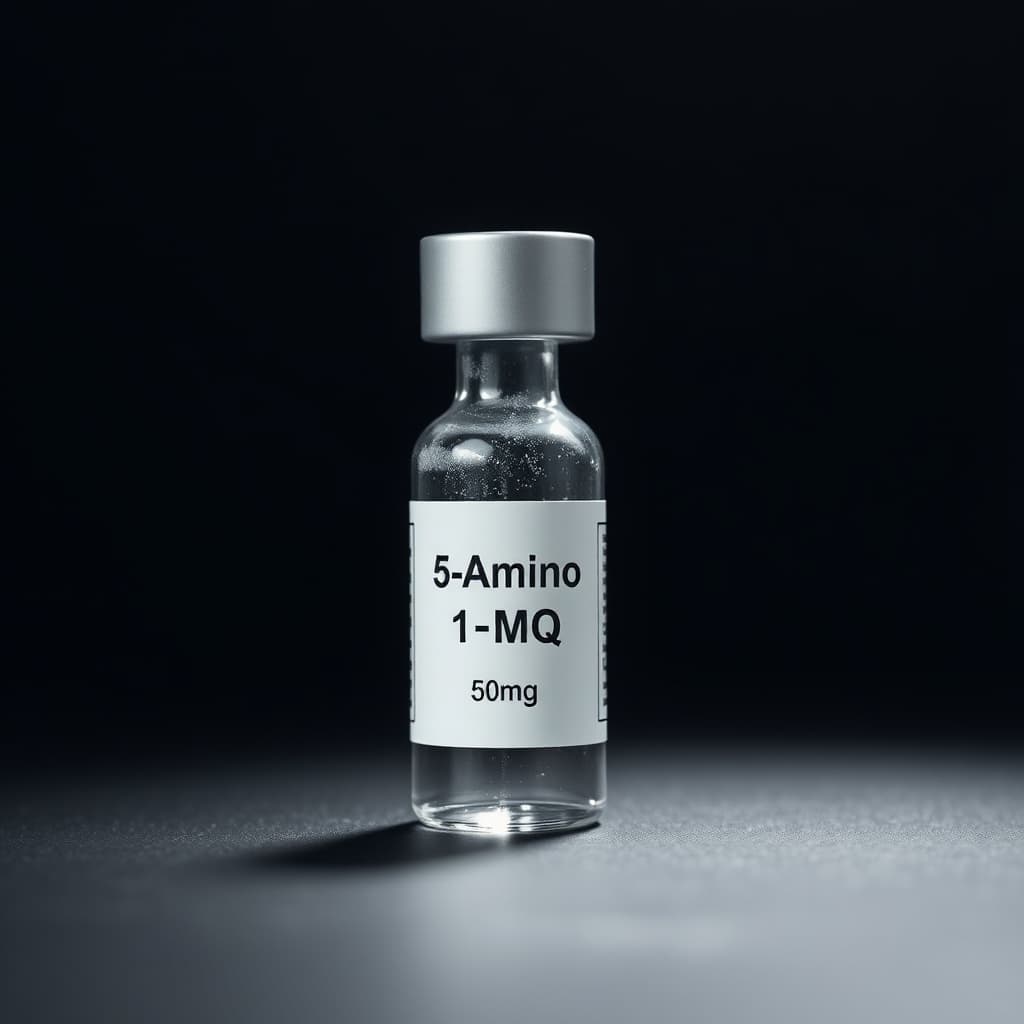
5-Amino-1MQ research peptide
Metabolic & Fat Loss

5-Amino-1MQ

Small-molecule selective NNMT inhibitor investigated for adipocyte and metabolic-pathway research.

Purity

99%+

CAS Number

53484-26-7

Status

Made to Order

Dispatch

Same-Day (before 2pm)

Select Size

£199.99

Out of Stock

Enquire About This Peptide

Get notified when 5-Amino-1MQ is back in stock, or ask about availability.

Research verification required. All orders are reviewed before dispatch. You will receive an email confirmation and a WhatsApp or phone call within 60 minutes to verify your research purpose.

Third-Party CoA Included Free Delivery Over £75 Research Use Only

About 5-Amino-1MQ

5-Amino-1MQ is a small-molecule, cell-permeable, selective inhibitor of nicotinamide N-methyltransferase (NNMT). It is not a peptide. Researchers investigate it in adipocyte models for its effects on cellular SAM/methylation balance, NAD⁺ salvage signalling and lipid storage. Supplied as a lyophilised solid for in vitro laboratory research only.

Research Applications

Research Mechanism — 5-Amino-1MQ

A simplified summary of what 5-Amino-1MQ is studied for in research models. For laboratory in-vitro use only.

Sequence:Small molecule — not a peptide

Origin: 5-Amino-1-methylquinolinium iodide is a synthetic small-molecule research compound developed as a selective inhibitor of nicotinamide N-methyltransferase (NNMT).

  1. Molecular target

    5-Amino-1MQ has been studied as a competitive inhibitor of NNMT, the enzyme that methylates nicotinamide using S-adenosyl methionine as a methyl donor. Investigations have characterised its binding within the NNMT active site.

    • Binds the NNMT catalytic pocket as a substrate mimetic
    • Competes with nicotinamide for enzyme occupancy
    • Reduces formation of 1-methylnicotinamide (MNA) in vitro
  2. Investigated pathways

    Preclinical studies have explored downstream effects on cellular NAD+ and SAM pools when NNMT activity is suppressed. Associated signalling involves sirtuin and PARP-dependent processes.

    • Elevation of intracellular NAD+ and SAM in adipocyte models
    • Modulation of SIRT1 deacetylase activity
    • Altered methyl-donor flux affecting histone methylation
  3. Preclinical research applications

    Preclinical studies have explored 5-Amino-1MQ in rodent models of diet-induced obesity and in cultured adipocytes. Not approved for human use.

    • Murine high-fat-diet adiposity models
    • 3T3-L1 adipocyte differentiation assays
    • C2C12 myotube studies of mitochondrial output

For research use only. 5-Amino-1MQ is not approved as a medicine in the UK and is not intended for human or veterinary administration. See the compliance page for full terms.

Technical Specifications

Compound Name5-Amino-1MQ
CategoryMetabolic & Fat Loss
CAS Number53484-26-7
Molecular Weight159.21 g/mol
Molecular FormulaC₁₀H₁₁N₂⁺
SequenceSmall molecule — not a peptide; N-methyl quinolinium salt (5-amino-1-methylquinolinium)
Purity≥99%+ (HPLC)
FormLyophilised powder
StorageStore lyophilised at -20°C. Protect from light. Reconstituted: aliquot and store at -80°C. Use within 30 days of reconstitution.
ReconstitutionReconstitute in sterile water or DMSO. Typical stock concentration: 10 mg/mL in water.

Certificate of Analysis

Every order of 5-Amino-1MQ includes a batch-specific CoA with HPLC chromatogram, mass spectrometry data, and laboratory accreditation details.

View Sample CoA

5-Amino-1MQ — Frequently Asked Questions

What is 5-Amino-1MQ?

5-Amino-1MQ is a small-molecule (not a peptide) selective inhibitor of nicotinamide N-methyltransferase (NNMT), studied in laboratory research on adipocyte metabolism, NAD⁺/SAM balance and methylation pathways.

What purity is your 5-Amino-1MQ?

99%+, confirmed by independent third-party HPLC analysis. Batch-specific CoA included.

Is 5-Amino-1MQ approved for human use?

No. Supplied for in vitro laboratory research only. Not a licensed medicine.

5-Amino-1MQ is supplied by Premio Peptides (BELL RED LIMITED) exclusively for in vitro laboratory research. It is not a licensed medicine, is not approved for human or veterinary use, and must not be administered to any living organism outside a formally approved research protocol. Purchasers assume full responsibility for compliance with applicable regulations.

Related Compounds