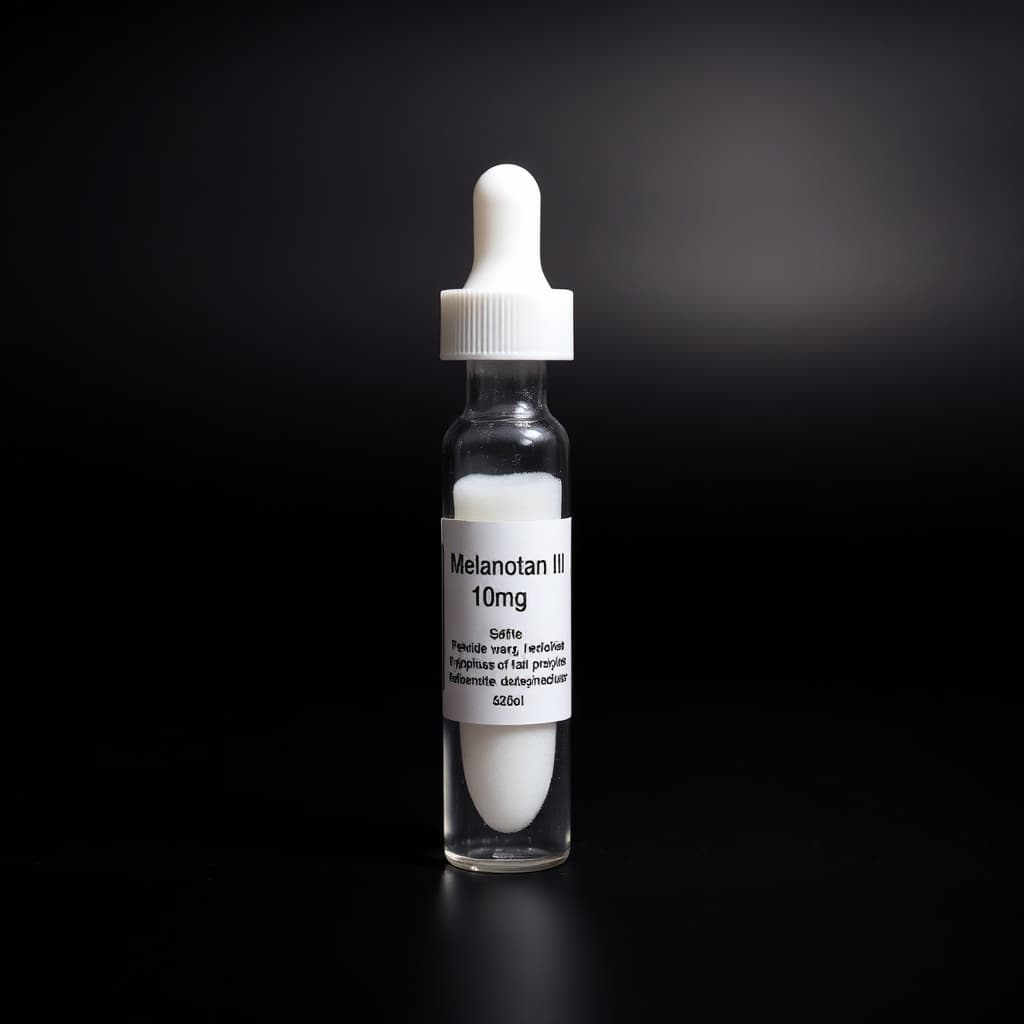
Melanotan II research peptide
Tanning

Melanotan II

Cyclic synthetic α-MSH analogue investigated for melanocortin-receptor activity and pigmentation research.

Purity

99%+

CAS Number

121062-08-6

Status

Made to Order

Dispatch

Same-Day (before 2pm)

Select Size

£199.99

Out of Stock

Enquire About This Peptide

Get notified when Melanotan II is back in stock, or ask about availability.

Research verification required. All orders are reviewed before dispatch. You will receive an email confirmation and a WhatsApp or phone call within 60 minutes to verify your research purpose.

Third-Party CoA Included Free Delivery Over £75 Research Use Only

About Melanotan II

Melanotan II (MT-2) is a cyclic lactam analogue of α-melanocyte-stimulating hormone, designed as a non-selective agonist at melanocortin receptors (notably MC1R, MC3R, MC4R). It is widely studied for its role in melanogenesis, appetite-regulation pathways and sexual-behaviour signalling in preclinical models. Supplied as lyophilised powder for in vitro laboratory research only.

Research Applications

Research Mechanism — Melanotan II

A simplified summary of what Melanotan II is studied for in research models. For laboratory in-vitro use only.

Sequence:Ac-Nle-cyclo[Asp-His-D-Phe-Arg-Trp-Lys]-NH₂

Origin: Synthetic cyclic heptapeptide analogue of α-MSH developed at the University of Arizona as a non-selective melanocortin receptor agonist.

  1. Molecular target

    Melanotan II is investigated as a non-selective agonist across the melanocortin receptor family. Preclinical work has characterised binding profiles at multiple MC subtypes.

    • MC1-R agonism (melanocyte Gαs coupling)
    • MC3-R and MC4-R activation in CNS models
    • MC5-R interaction in peripheral tissues
  2. Investigated pathways

    Studies have explored adenylate cyclase activation and downstream cAMP elevation following MC receptor engagement. Research has associated MC1-R signalling with eumelanin synthesis in melanocyte cultures.

    • Gαs/adenylate cyclase/cAMP/PKA cascade
    • MITF transcription factor activation
    • Tyrosinase upregulation in melanogenesis pathway
  3. Preclinical research applications

    Preclinical studies have explored Melanotan II in rodent melanocortin receptor pharmacology and B16 melanoma cell pigmentation models. Not approved for human use.

    • B16-F10 melanocyte tyrosinase activity assays
    • Rodent MC4-R receptor binding characterisation
    • In vitro cAMP accumulation dose-response studies

For research use only. Melanotan II is not approved as a medicine in the UK and is not intended for human or veterinary administration. See the compliance page for full terms.

Technical Specifications

Compound NameMelanotan II
CategoryTanning
CAS Number121062-08-6
Molecular Weight1024.18 g/mol
Molecular FormulaC₅₀H₆₈N₁₄O₁₀
SequenceAc-Nle-cyclo[Asp-His-D-Phe-Arg-Trp-Lys]-NH₂
Purity≥99%+ (HPLC)
FormLyophilised powder
StorageStore lyophilised at -20°C. Protect from light. Reconstituted: aliquot and store at -80°C. Use within 30 days of reconstitution.
ReconstitutionReconstitute in bacteriostatic or sterile water. Typical stock concentration: 1 mg/mL.

Certificate of Analysis

Every order of Melanotan II includes a batch-specific CoA with HPLC chromatogram, mass spectrometry data, and laboratory accreditation details.

View Sample CoA

Melanotan II — Frequently Asked Questions

What is Melanotan II?

Melanotan II is a synthetic cyclic analogue of α-MSH that is researched as a non-selective melanocortin-receptor agonist, with studies covering pigmentation, appetite and sexual-behaviour pathways.

What purity is your Melanotan II?

99%+, confirmed by independent third-party HPLC analysis. Batch-specific CoA included.

Is Melanotan II approved for human use?

No. Supplied for in vitro laboratory research only. Not a licensed medicine.

Melanotan II is supplied by Premio Peptides (BELL RED LIMITED) exclusively for in vitro laboratory research. It is not a licensed medicine, is not approved for human or veterinary use, and must not be administered to any living organism outside a formally approved research protocol. Purchasers assume full responsibility for compliance with applicable regulations.

Related Compounds