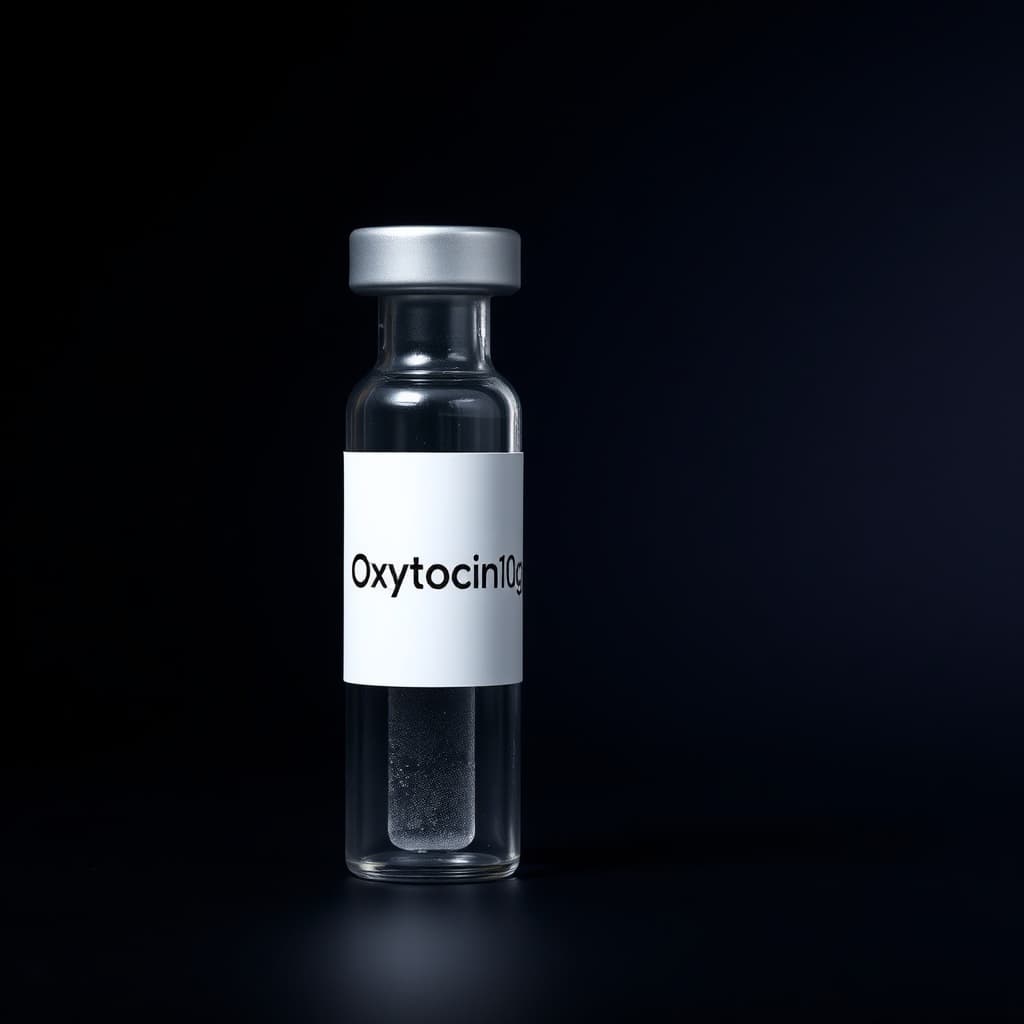
Oxytocin research peptide
Sexual Health

Oxytocin

Cyclic nonapeptide hormone investigated for social-bonding, mood and reproductive-signalling research.

Purity

99%+

CAS Number

50-56-6

Status

Made to Order

Dispatch

Same-Day (before 2pm)

Select Size

£199.99

Out of Stock

Enquire About This Peptide

Get notified when Oxytocin is back in stock, or ask about availability.

Research verification required. All orders are reviewed before dispatch. You will receive an email confirmation and a WhatsApp or phone call within 60 minutes to verify your research purpose.

Third-Party CoA Included Free Delivery Over £75 Research Use Only

About Oxytocin

Oxytocin is a cyclic nonapeptide hormone that your body naturally makes in the hypothalamus and releases through the posterior pituitary gland. You've probably heard it called the 'love hormone' — and there's good reason for that nickname. This little molecule contains nine amino acids with a crucial disulfide bridge between cysteine residues at positions 1 and 6. That bridge isn't just structural decoration; it's what keeps the hormone stable and biologically active. Here's how it works: oxytocin binds to oxytocin receptors (OXTR), which kicks off phospholipase C pathways and gets calcium moving around cells. Pretty neat molecular machinery. Researchers use oxytocin to dig into all sorts of fascinating areas. They're looking at how social bonds form, what drives maternal behaviour, how we handle stress, and even neuroplasticity. The findings are quite remarkable — studies show oxytocin genuinely affects trust formation, boosts empathy, and helps establish pair-bonds in lab models. But that's not all. Scientists have explored its neuroprotective properties and potential applications in autism spectrum disorder research. There's also ongoing work on reproductive physiology, labour induction mechanisms, and how the hypothalamic-pituitary-adrenal axis works. Our pharmaceutical-grade oxytocin comes as a sterile lyophilised powder with >98% purity — we've verified this through HPLC analysis. Each vial contains precisely measured quantities that you can reconstitute in sterile water or buffer solutions. Storage is straightforward but critical: keep it at -20°C to maintain the peptide's integrity. Remember, this is strictly for in vitro research applications only.

Research Applications

Research Mechanism — Oxytocin

A simplified summary of what Oxytocin is studied for in research models. For laboratory in-vitro use only.

Sequence:CYIQNCPLG-NH2 (cyclic, Cys1-Cys6 disulphide bridge)

Origin: Nine-amino-acid cyclic neuropeptide first isolated by du Vigneaud in 1953, synthesised in hypothalamic magnocellular neurons.

  1. Molecular target

    Oxytocin binds the OXTR, a class A Gq-coupled GPCR, with cross-reactivity at vasopressin V1a receptors. The intramolecular disulphide bridge is required for receptor engagement.

    • OXTR (oxytocin receptor) — Gq/PLC signalling
    • V1a receptor cross-reactivity at higher concentrations
    • Disulphide-stabilised cyclic conformation required
  2. Investigated pathways

    Research explores OXTR signalling through PLC-IP3, intracellular calcium release and downstream MAPK cascades. Central and peripheral OXTR populations are studied separately.

    • PLC-beta / IP3 / DAG and calcium mobilisation
    • MAPK (ERK1/2) and PI3K downstream signalling
    • Hypothalamic-limbic circuit modulation in rodents
  3. Preclinical research applications

    Investigated in animal models of social behaviour, pair-bonding, stress reactivity and uterine smooth-muscle physiology. Not approved for human use.

    • Rodent social recognition and pair-bonding paradigms
    • HPA-axis and corticosterone response models
    • Uterine and mammary smooth-muscle ex vivo assays

For research use only. Oxytocin is not approved as a medicine in the UK and is not intended for human or veterinary administration. See the compliance page for full terms.

Technical Specifications

Compound NameOxytocin
CategorySexual Health
CAS Number50-56-6
Molecular Weight1007.19 g/mol
Molecular FormulaC₄₃H₆₆N₁₂O₁₂S₂
SequenceCys-Tyr-Ile-Gln-Asn-Cys-Pro-Leu-Gly-NH₂ (disulfide bridge Cys1–Cys6)
Purity≥99%+ (HPLC)
FormLyophilised powder
StorageStore lyophilised at -20°C. Protect from light. Reconstituted: aliquot and store at -80°C. Use within 30 days of reconstitution.
ReconstitutionReconstitute in sterile bacteriostatic water or 0.9% sodium chloride. Typical stock concentration: 1 mg/mL.

Certificate of Analysis

Every order of Oxytocin includes a batch-specific CoA with HPLC chromatogram, mass spectrometry data, and laboratory accreditation details.

View Sample CoA

Oxytocin — Frequently Asked Questions

What is Oxytocin?

Oxytocin is a cyclic nonapeptide hormone investigated in laboratory research for its receptor activity and association with social-bonding, stress, and reproductive signalling.

What purity is your Oxytocin?

99%+, confirmed by independent third-party HPLC analysis. Batch-specific CoA included.

Is Oxytocin approved for human use?

No. Supplied for in vitro laboratory research only. Not a licensed medicine.

Oxytocin is supplied by Premio Peptides (BELL RED LIMITED) exclusively for in vitro laboratory research. It is not a licensed medicine, is not approved for human or veterinary use, and must not be administered to any living organism outside a formally approved research protocol. Purchasers assume full responsibility for compliance with applicable regulations.

Related Compounds